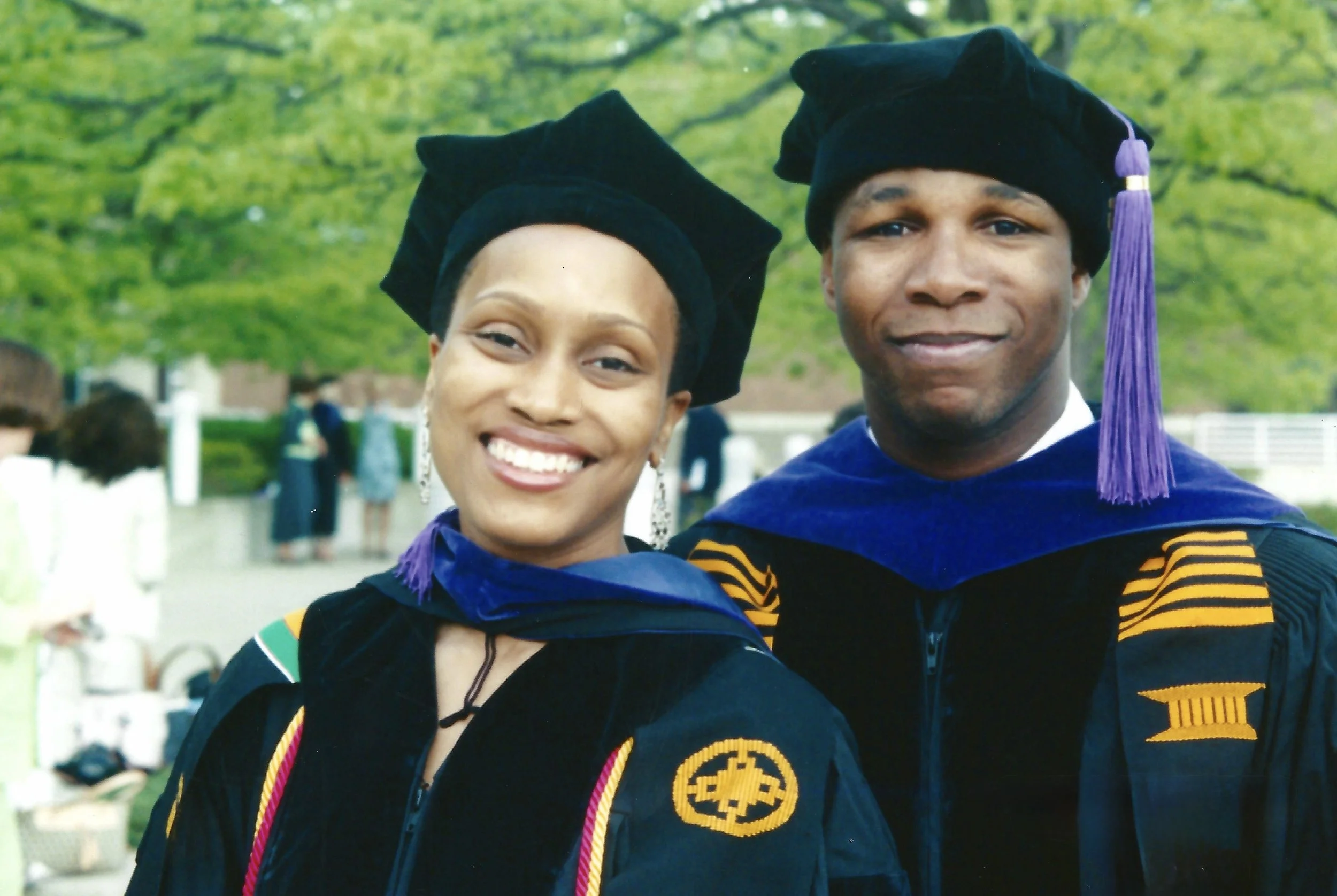
Neverson Heatley, III
I help educational institutions recognize human potential, strengthen the systems that support student success, and cultivate communities where learning, integrity, and opportunity reinforce one another.
My Career: An Introduction
My career has been guided by a simple belief: education has the power to transform lives, but only when institutions are willing to recognize potential that others may overlook.
That belief did not begin in a university office or a doctoral seminar. It was shaped by my own experiences as a student navigating instability, by the educators who challenged me to see possibilities beyond my circumstances, and by the realization that schools and universities can either become gateways to opportunity or barriers that limit it. Those experiences continue to influence every role I have held—as a teacher, higher education administrator, researcher, journal editor, curriculum leader, and international educator.
Throughout my career, I have worked across secondary schools, colleges, universities, nonprofit organizations, and international educational settings. I have advised students, developed institutional policies, taught undergraduate and graduate courses, supported accreditation and assessment efforts, edited scholarly publications, led student affairs initiatives, and worked with colleagues to strengthen educational programs and improve student outcomes. Whether serving as an Assistant Dean of Students, working in Student Conduct, leading an English department in Colombia, or contributing to academic research, I have remained focused on helping institutions better serve the people who depend upon them.
My academic interests have consistently centered on educational leadership, student success, institutional effectiveness, higher education law, restorative approaches to student conduct, and expanding opportunities for historically underserved populations. These interests have guided my research, informed my professional practice, and shaped the questions I continue to explore as an educator and scholar.
Although education has been the defining focus of my professional life, I have never viewed learning as something confined to classrooms or campuses. My work has been enriched by experiences in law, international education, technology, photography, music, and community engagement, each providing a different perspective on leadership, communication, and human development.
Today, I continue to teach, write, create, and learn while living and working in Colombia. Regardless of the setting, my purpose remains the same: to help build educational environments where students are challenged, supported, and encouraged to realize possibilities they may not yet see in themselves.
My Impact on Education
Every position I have held has reinforced a lesson I first learned as a student: the quality of an educational institution is measured not only by the knowledge it produces, but by the opportunities it creates for others.
Over the course of my career, I have worked across multiple sectors of education, contributing as a teacher, administrator, researcher, attorney, editor, and institutional leader. My experience spans secondary education, undergraduate and graduate instruction, student affairs, academic publishing, curriculum leadership, and international education. These varied roles have given me the opportunity to view education from multiple perspectives while remaining committed to a common goal, helping students and institutions succeed together.
My work has focused on supporting student development, strengthening institutional policies, promoting equitable educational opportunities, and improving organizational effectiveness. I have collaborated with faculty, administrators, students, and educational organizations to address challenges ranging from student conduct and campus life to curriculum design, assessment, accreditation, and educational leadership. As a scholar, I have examined issues affecting access to higher education, diversity within legal education, and the ways institutional systems influence student success.
Teaching has remained one of the most rewarding aspects of my career. From university classrooms to international schools, I have sought to cultivate environments that encourage curiosity, critical thinking, cultural understanding, and lifelong learning. Working with students from diverse backgrounds has reinforced my belief that talent is distributed far more broadly than opportunity, and that one of education's greatest responsibilities is helping bridge that gap.
Living and working internationally has further expanded my understanding of education as a global endeavor. My years in Colombia have deepened my appreciation for language, culture, and the ways education can foster meaningful connections across communities and national boundaries. These experiences continue to influence both my teaching and my broader perspective on educational leadership.
While professional titles and academic credentials tell part of the story, I believe my greatest contribution has been helping students recognize possibilities they may not have imagined for themselves. Whether through teaching, mentoring, research, institutional leadership, or creative work, I have sought to contribute to educational communities that value curiosity, integrity, service, and human potential.
As my career continues to evolve, I remain committed to scholarship, leadership, creativity, and international collaboration, while continuing to explore new ways education can empower individuals and strengthen institutions for generations to come.
Professional Philosophy
Education Is About Possibility
I believe the purpose of education extends far beyond sharing knowledge. At its best, education expands what people believe is possible for themselves and equips them with the confidence, skills, and character to pursue those possibilities.
Throughout my life, I have experienced educators who looked beyond my circumstances and recognized potential that I had not yet fully recognized in myself. Their willingness to invest in a student who was often overlooked changed the trajectory of my life. It also shaped the way I approach my own work. Whether teaching in a classroom, mentoring a struggling student, designing curriculum, or developing institutional policy, I strive to create environments where people are challenged to achieve more than they believed possible.
For me, success is measured not only by academic outcomes, but by the opportunities institutions create for individuals to discover their own potential.
Institutions Multiply Human Potential
Exceptional educators change individual lives. Exceptional institutions multiply those changes across generations.
Throughout my career I have been drawn to work that strengthens educational systems rather than simply maintaining them. Whether redesigning curriculum, developing academic policies, improving editorial workflows, building admissions systems, implementing student support initiatives, or strengthening institutional processes, I have consistently sought opportunities to leave organizations stronger than I found them.
Strong institutions do not exist for their own sake. Their purpose is to create environments where students, faculty, and staff can thrive together. I believe that thoughtful leadership is measured by the systems it builds, the people it develops, and the culture it leaves behind.
Student Success Is Systemic
Students rarely succeed or struggle for a single reason.
Academic ability, motivation, and perseverance certainly matter, but so do the structures surrounding students: institutional expectations, access to resources, faculty engagement, policies, mentoring, and a sense of belonging. Throughout my career I have seen talented students flourish when institutions provide clarity, support, and accountability, and I have seen equally talented students struggle when those systems fail.
This understanding has shaped my work in student affairs, curriculum development, assessment, academic policy, and institutional research. Rather than asking why individual students fail, I believe educational leaders should continually ask how institutions can remove unnecessary barriers while maintaining high expectations for excellence.
Student success is not accidental. It is intentionally designed.
Leadership Is Purposeful Service
I believe leadership is purposeful service directed toward goals that promote the success of students and, through their success, strengthen the institutions that serve them.
Leadership is not primarily about authority, titles, or visibility. It is about accepting responsibility for improving organizations, making thoughtful decisions, supporting colleagues, and helping others accomplish meaningful work.
Throughout my career I have tried to lead in ways that are practical rather than performative. That has meant mentoring new teachers, supporting students through academic and personal crises, designing systems that improve institutional effectiveness, helping faculty succeed, and working quietly behind the scenes to solve problems before they become larger ones.
The measure of leadership is not how much recognition a leader receives, but how much stronger an institution becomes because that leader served there.
Data Should Inform Judgment
Evidence is essential to educational leadership, but numbers alone rarely tell the complete story.
Throughout my career I have relied upon assessment data, institutional research, and evidence-based decision making to guide improvement. Whether analyzing student achievement, redesigning curriculum, evaluating educational policy, or conducting research, I believe data provides an indispensable foundation for thoughtful leadership.
At the same time, educational communities are composed of people, not spreadsheets. Effective leaders must balance quantitative evidence with professional judgment, experience, context, empathy, and an understanding of individual circumstances.
The best decisions are informed by evidence without becoming constrained by it.
Learning Is a Lifelong Responsibility
One of the greatest privileges of working in education is the opportunity to remain a student throughout one's career.
From Harlem to Florida, New York, Illinois, Finland, and Colombia, my professional journey has continually required me to learn new disciplines, cultures, languages, technologies, and perspectives. Each transition has reinforced my belief that effective educators cannot ask students to embrace lifelong learning unless they are willing to model it themselves.
Whether pursuing graduate study, learning a new language, exploring artificial intelligence, contributing to academic publishing, or refining my teaching practice, I continue to approach each experience with curiosity and humility.
Education is not simply my profession. It is the lens through which I continue to understand the world.
Leadership in Practice
"Educational leadership is purposeful service directed toward goals that promote the success of students and, through their success, strengthen the institutions that serve them."
Areas of Leadership
Educational Leadership
My leadership experience spans higher education, international schools, academic publishing, nonprofit education, and institutional administration. Across each setting, I have focused on strengthening educational systems while keeping students at the center of institutional decision-making. My work has included curriculum leadership, faculty mentoring, strategic planning, policy development, assessment, accreditation support, and organizational improvement.
Most recently, as Upper School English Language Arts Director at Colegio Panamericano, I led a department-wide curriculum redesign aligned with NWEA MAP assessment data, contributing to the school's highest rate of growth in Reading achievement. I authored the Upper School English Language Arts curriculum, mentored faculty, supervised international teachers, and supported their transition into the Colombian educational environment. Earlier leadership roles included designing academic support systems at Florida A&M University College of Law, strengthening admissions and operational systems at One League, and helping improve editorial workflows for an international peer-reviewed journal.
Student Affairs and Student Success
Student affairs has been one of the defining foundations of my professional career. My philosophy has always been that student affairs exists not merely to respond to crises, but to create conditions that allow students to succeed academically, professionally, and personally.
As Assistant Dean for Student Affairs at Florida A&M University College of Law and later as Specialist in Students' Rights and Responsibilities at Southern Illinois University, I advised students through academic challenges, professional development, personal crises, and institutional processes. I created the College of Law's first comprehensive academic tracking system to identify students needing intervention, contributed to an early-alert process that strengthened academic outcomes, mentored law students throughout their legal education, and developed professionalism programming that connected students with members of the legal profession.
My responsibilities frequently extended beyond traditional administrative duties. I served as both a Title IX and Clery reporting officer, coordinated responses to emergency student situations, and worked collaboratively across university offices to protect student welfare while maintaining institutional accountability. Among the experiences that have remained most meaningful to me were helping prevent the expulsion of a group of young Black male students by advocating for a more educational and restorative approach, and assisting remotely in coordinating support for a law student believed to be under the influence of a date-rape drug until appropriate help could be secured.
These experiences reinforced my conviction that educational leadership is often measured not during routine operations, but during moments when students are at their most vulnerable.
Curriculum, Assessment, and Instruction
Throughout my career I have viewed curriculum as more than a collection of lessons. Effective curriculum creates coherence across classrooms, establishes high expectations, and provides teachers with a shared framework for helping students succeed.
My work has included designing vertically aligned English Language Arts curricula, mentoring teachers, analyzing assessment data, supporting International Baccalaureate instruction, strengthening grading consistency, and integrating authentic learning experiences into classroom instruction. I have consistently used assessment data not simply to evaluate learning, but to improve teaching and strengthen educational decision-making.
Whether teaching graduate students, undergraduate students, or secondary students, I seek to create learning environments that encourage curiosity, critical thinking, and intellectual independence while maintaining rigorous academic standards.
Institutional Policy and Organizational Systems
Much of my career has involved improving the systems that support educational institutions.
I have authored academic policies, developed admissions systems, redesigned administrative workflows, strengthened publication processes, created faculty resources, implemented academic tracking systems, and contributed to institutional decision-making through research and assessment. These projects have ranged from building integrated admissions databases and faculty onboarding systems to redesigning editorial production processes that significantly improved publication efficiency.
I believe effective systems allow educators to spend less time navigating unnecessary bureaucracy and more time serving students. Well-designed policies create consistency without sacrificing flexibility, and thoughtful organizational structures allow institutions to respond more effectively to changing educational needs.
Research, Scholarship, and Academic Publishing
My research and scholarly interests focus on the relationship between educational institutions and student opportunity. My doctoral research examined minority enrollment at American Bar Association-accredited law schools, while subsequent institutional research explored student conduct, academic performance, legal education, and educational policy.
As Assistant Lead Editor for the Journal of Comparative & International Higher Education, I contribute to the publication of scholarship from researchers around the world by overseeing editorial production, strengthening publication workflows, and supporting authors throughout the publication process. This work has deepened my appreciation for the collaborative nature of scholarship and the importance of making high-quality educational research accessible to practitioners and researchers alike.
For me, research has never been separate from practice. It is one of the ways educational leaders ask better questions, evaluate institutional effectiveness, and develop solutions that improve educational outcomes.
International Education and Cross-Cultural Leadership
Living and working in Colombia for more than eight years has transformed both my teaching and my understanding of educational leadership.
Working within bilingual and international schools has required me to adapt across languages, cultures, and educational systems while supporting students, families, and colleagues from diverse backgrounds. Beyond classroom teaching, I have mentored international faculty, collaborated with Colombian educators, developed curriculum, and helped build stronger academic communities within international educational environments.
International education has reinforced my belief that effective leadership begins with listening, cultural humility, and a genuine respect for the communities we serve. While educational systems differ across countries, the aspirations of students and families remain remarkably similar. My goal has always been to help create learning environments where those aspirations can become reality.
Building Better Educational Systems
Looking back across my career, a consistent pattern emerges. Regardless of the institution or position, I have been drawn toward work that strengthens the systems supporting education.
Whether creating an academic tracking system for law students, redesigning English Language Arts curriculum, negotiating insurance agreements for New York City charter schools, modernizing editorial workflows for an international journal, developing admissions processes, mentoring faculty, or helping institutions make better use of data, my work has consistently focused on improving the structures through which education is delivered.
I believe institutions fulfill their greatest purpose when they recognize human potential, build systems that allow people to succeed, and cultivate communities where learning, integrity, and opportunity reinforce one another. Throughout my career, I have sought to contribute to those institutions through leadership, scholarship, teaching, and service.
What Others Have Said
Anyjah was my doctoral candidate at the University of Florida. He was an active participant in my courses, consistently contributing to discussion concerning trends in Higher Education. He served on a number of committees for the College of Education, including the search for an Associate Dean. He has shown a strong commitment to diversity, focusing on the study of minority enrollment in law schools. Towards that end, he has shown great adaptability and resilience, having overcome a number of hurdles towards the completion of his doctorate and I am glad to have been able to help him realize that goal. I believe Anyjah's background in law will make him a great administrator at the University level, one that can lead with empathy and has the tools to competently use data and research to guide decisions.
- Dale Campbell, Ph.D.
“He is a serious, hardworking, responsible, punctual, organized professional who willingly shares his knowledge with colleagues and students.”
“He is an important asset for our teaching community due to his uncanny ability to adapt to various challenges.”
“Each time, he has risen to the occasion.”
I am writing to enthusiastically recommend Neverson as an outstanding educator. Throughout our professional association, I have witnessed Neverson's exceptional qualities as a teacher, marked by his passion, humility, advocacy for students, student-centered approach, and collaborative spirit. Neverson's passion for teaching is evident in every lesson he delivers. His enthusiasm for the subject matter and commitment to student learning are infectious, inspiring students to engage deeply with the material. He consistently goes above and beyond to make his classes not only informative but also exciting and relevant, fostering a love of learning in his students. One of Neverson's most remarkable traits is his humility. Despite his extensive knowledge and expertise, he remains approachable and open-minded. He values the contributions of others and continually seeks to learn from his colleagues and students, creating a dynamic and inclusive learning environment. As an advocate for his students, Neverson is dedicated to supporting their academic and personal growth. He takes the time to understand each student's unique needs and challenges, providing personalized guidance and encouragement. His unwavering belief in their potential helps students to overcome obstacles and achieve their best. Neverson's student-centered approach is at the heart of his teaching philosophy. He prioritizes the needs and interests of his students, designing lessons that are engaging and tailored to their learning styles. His empathetic and supportive demeanor ensures that every student feels valued and empowered to succeed. Collaboration is another area where Neverson excels. He actively seeks opportunities to work with colleagues, sharing ideas and best practices to enhance the overall educational experience. His collaborative mindset fosters a sense of community and shared purpose among staff and students alike. In summary, Neverson is an exceptional teacher whose passion, humility, advocacy, student-centered approach, and collaborative spirit make him a true asset to any educational institution. I have no doubt that he will continue to inspire and positively impact the lives of his students and colleagues.
- Cristina Mancheno
“His approach melds the theoretical with the practical and, as a result, he drives impact.”
Neverson-Anyjah Heatley, Ill was an instrumental in helping me balance academics and student leadership at Florida A&M University College of Law. As a student, I had the chance to work closely with him when I was president of an organization. He was always ready to lend a hand and offered valuable guidance that made our group flourish. His dedication to helping students like me navigate both academic and personal challenges was seriously impressive. His know-how in everything from organizing events to providing practical career advice was invaluable. Not just a fantastic advisor, but also a mentor who truly cared. Neverson is one of the most passionate I know regarding education. Any university would be lucky to have him. I couldn't recommend him more!
- Dorrissa Griffin, Esq.
“Mr. Heatley consistently modeled a calm confidence which earned him the respect and the buy-in needed to be effective in his daily work.”
“He successfully provided students with the appropriate balance of tough love, challenge, and support.”
Research & Scholarship
My research explores the relationship between institutional structures and educational opportunity, particularly how policy, leadership, and organizational systems influence access, student success, and institutional effectiveness.
Heatley, III, Neverson-Anyjah. (2025, March 8-9). Two Novel Ideas to Promote English Language Immersion [Conference Session]. Bolivar Forum, Santiago de Cali, Valle de Cauca, Colombia.
Heatley, Neverson. (2017). Analyzing Minority Enrollment at American Bar Association Accredited Law Schools Between 2004 - 2012 Using Feedback Loops. University of Florida, Gainesville, Florida.
Heatley, Neverson. (2012). A Look at the Conduct Participation Rates of Black Males at Southern Illinois University, Carbondale. Southern Illinois University.
Heatley, Neverson. (2009). Bar and Academic Performance of Graduates from 2005 - 2008. Florida A&M University College of Law.
Heatley, Neverson. (2007). Gratz, Grutter, and the Future of Higher Education [Conference Keynote Presentation]. Florida Education Fund McKnight Doctoral Fellowship Summer Meeting, Tampa, Florida.
Wood R. Craig, Deziree Elliot, Carlee Poston Escue, and Neverson-Anyjah Heatley. (2008). North Carolina School Boards Association v. Moore: A Decision Without a Solution. ELA Notes.
Professional Development
Heatley, III, Neverson-Anyjah. (2025, March 8-9). Two Novel Ideas to Promote English Language Immersion [Conference Session]. Bolivar Forum, Santiago de Cali, Valle de Cauca, Colombia.
Heatley, Neverson. (2017). Analyzing Minority Enrollment at American Bar Association Accredited Law Schools Between 2004 - 2012 Using Feedback Loops. University of Florida, Gainesville, Florida.
Heatley, Neverson. (2012). A Look at the Conduct Participation Rates of Black Males at Southern Illinois University, Carbondale. Southern Illinois University.
Heatley, Neverson. (2009). Bar and Academic Performance of Graduates from 2005 - 2008. Florida A&M University College of Law.
Heatley, Neverson. (2007). Gratz, Grutter, and the Future of Higher Education [Conference Keynote Presentation]. Florida Education Fund McKnight Doctoral Fellowship Summer Meeting, Tampa, Florida.
Wood R. Craig, Deziree Elliot, Carlee Poston Escue, and Neverson-Anyjah Heatley. (2008). North Carolina School Boards Association v. Moore: A Decision Without a Solution. ELA Notes.