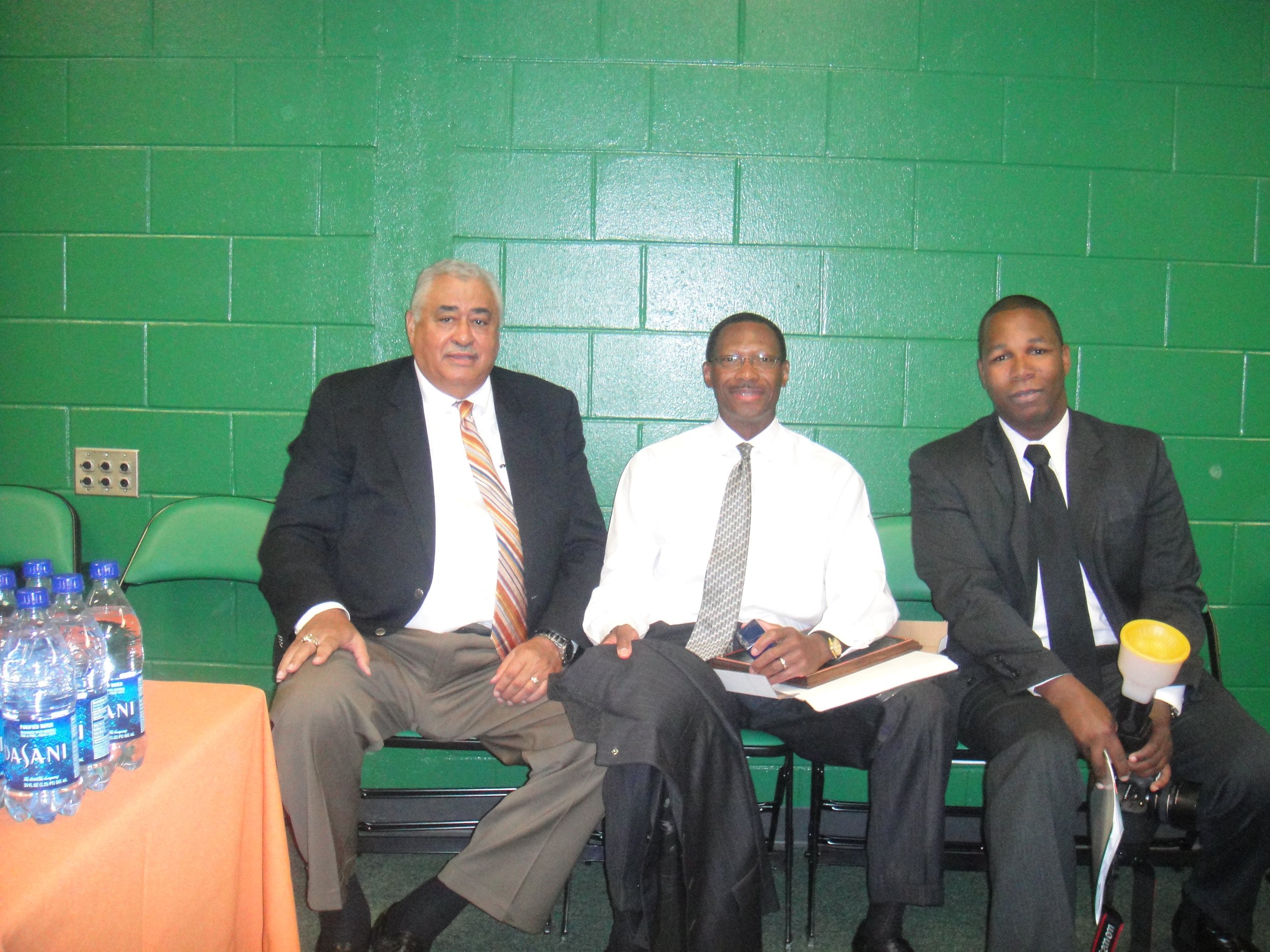
“The Three Presidents” (Humphries, Ammons, Myself)
Growing Up in Other People's Homes
Chapter II
My mother's struggle with addiction eventually became more severe. When I was young, she entered rehabilitation, and I stayed with a neighbor for several months. I cannot remember precisely how long, perhaps four to six months, but I remember what happened when she returned.
There was a woman standing at the door. I did not recognize her. I thought she was a stranger, and I refused to open the door.
The woman was my mother.
For a brief period after her return, things seemed different. My mother found work as a transit police officer. I remember seeing her directing traffic near the Queensboro Bridge. As a little boy watching his mother command all those cars, I thought she had superpowers. I was incredibly proud of her.
Unfortunately, the stability did not last. Her addiction returned, and eventually we lost our home. What followed was a childhood of moving between apartments, relatives' homes, temporary places, and, for a period, a shelter in Lower Manhattan.
Then, when I was around eight or nine years old, my life changed again. My mother and I were walking through the South Bronx on our way to my aunt's house. I wanted french fries. Apparently, I wanted them badly enough to cry about them for what must have seemed like half a mile. My mother eventually spanked me near Webster Avenue and 171st Street. Someone called the police.
The police arrived and separated us. I remember being told that I would see my mother again soon. Then I was told that I would not.
Whatever the adults understood about that moment, I understood only one thing: my mother was gone.
I would not see her again for approximately two years.
Other People's Homes
I entered the child welfare system and spent time in group homes before eventually being placed with different members of my extended family. I wish I could say that foster care provided the stability that had been missing from my childhood. My experience was considerably more complicated.
I became increasingly aware that the financial assistance attached to caring for me influenced relatives' willingness to take me into their homes. I moved between family members and other adults, never quite feeling that I belonged anywhere.
There are only a few things I specifically remember receiving from the foster-care money intended for my care: a pair of Air Jordans—the Bugs Bunny Jordans—a pair of slacks, and, later, the opportunity to participate in a school trip to Washington, D.C. And that trip was only done after a tremendous amount of pleading.
Those things remain in my memory because so much of the rest of that period was defined by scarcity.
I remember being hungry. I remember eating peanut butter and jelly mixed together in a bowl. I remember frying bologna on the stove while watching expensive food being purchased for household pets.
Children notice contradictions that adults assume they do not understand.
I noticed.
The Years Nobody Asked
Fifth and sixth grades were among the hardest years of my childhood. For a period, I lived in a home that provided better physical surroundings than some of the places where I had previously stayed, but I still experienced profound neglect.
Nobody seemed to be asking the basic questions that every child deserves to have someone ask: Are you okay? Are you eating? Do you have somewhere safe to sleep? Do you feel loved?
By sixth grade, I had reached a point where I did not believe that anyone truly cared whether I lived or died. I experienced a suicidal crisis and intended to jump from the roof of my school.
School intervened. Guidance counselors reached me before I could act.
When I look back on that child now, I think about how easily he could have disappeared. I also think about the fact that it was, once again, educators who were there.
That matters to me.
It is impossible for me to separate my eventual career in education from my experience as a child whose schools sometimes provided the only adults who noticed what was happening.